
100 Years of Indian Cinema (2): The Age of Dadasaheb Phalke
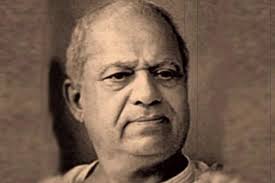
A painter by profession, Dhundiraj Govind Phalke, was a painter by training and profession. His creative mind led him to become a photographer, but due to disgusting social beliefs that when a person is photographed he loses energy or virility or that the person’s life is reduced, he could not make a success of it. He dabbled in architecture, block-making and even ceramics. He ran a printing press at Lonavala and even transferred many of Ravi Verma’s oleographs.
Phalke possibly settled down as a printer but then, great creative minds never stop. He chanced upon a film called The Life of Jesus Christ in 1910 and that gave him the idea to make a full-length feature film based on Indian mythological characters. He already had dabbled in painting, photography, make-up, sets and printing and he made a trip to England to learn the intricacies of film-making and upon his return opened a company, which was managed by his wife who also looked after the technical aspects of the film. In 1913, he churned out Raja Harsihchandra, Mohini Bhamasur, Satyavan Savitri — a total of five films in all.
Like all entrepreneurs’ tales, Phalke’s is also a story of struggle. When he started his company, he had taken a loan against his insurance policies. Later, he had differences with his partners and kept walking out of projects. He was a sincere professional and refused to compromise on quality and technology, which meant that many of his films overshot the budget. By the time he retired, the Indian film industry had started taking firm steps. His last film was Gangavataran, which was released in 1937 and it was also the only sound film he ever made. In fact, one reason for Phalke’s later day failures were due to his inability to manage the technology of sound.
By the time Phalke hung up his boots (he died in 1944 at Nashik), Indian cinema had shifted gears and within four years of the first talkie, The Jazz Singer, releasing in the US, India had Alam Ara in March 1931 and Aredeshir Irani, who made Alam Ara, went on to produce the first South Indian talkie, Kalidasa, directed by H M Reddy, which released in October 1931.
In Bengal, where film business was moving at a hectic pace, what with the Madans running the rules, the first feature film was made in 1919, but released in 1921. The main reason for the delay was that while the film was ready for exhibition, due to professional rivalry, Nitish Lahiri, who worked as the Manager of Madan Company had quit and joined Dhirendranath Ganguli, immortalised at DG, and since the film, Bilet Pherot, was made by DG, Madan, who had monopoly control in cinema halls, were not allotting their halls. A new cinema theatre, Russa,(later Purna), opened with Bilet Pherot.
The first talkie in Bengali, Jamai Shashtihi, was released in April 1931, within a month of Alam Ara
Indian cinema was now talking.
Courtesy : Artpickles