
100 Years of Indian Cinema (1): The Age of Hiralal Sen
In 1895, the Lumiere Brothers premiered their technology at a meeting of industries in Paris and within a year they were exhibiting their marvel at The Watson Hotel in Mumbai.
Today, the Indian film industry is estimated to be about $ 3.7 billion in 2020 (Corona notwithstanding), growing @ 11% per year. She produces 1500 to 2000 films a year in multiple languages from Tamil to Bhojpuri. However, it falls far behind the US in terms of per capita screens (1:96300 residents, against US 1: 7800 residents) and so the revenues are lower. It is the biggest form of entertainment in India which dominates the Indian economy, politics and the underworld mafia activities. Many film personalities, especially in South India, are treated as divinity!
India was fortunate to have the Lumiere Brothers visit India within a few months of the Paris Show, as it sparked off a new interest in the minds of many entrepreneurs in India. As a result, by 1898, Hiralal Sen had actually made Flowers of Persia, pioneering the film industry in India. By 1913, Dadasaheb Phalke had completed Raja Harishchandra, considered the first full-length feature in India.
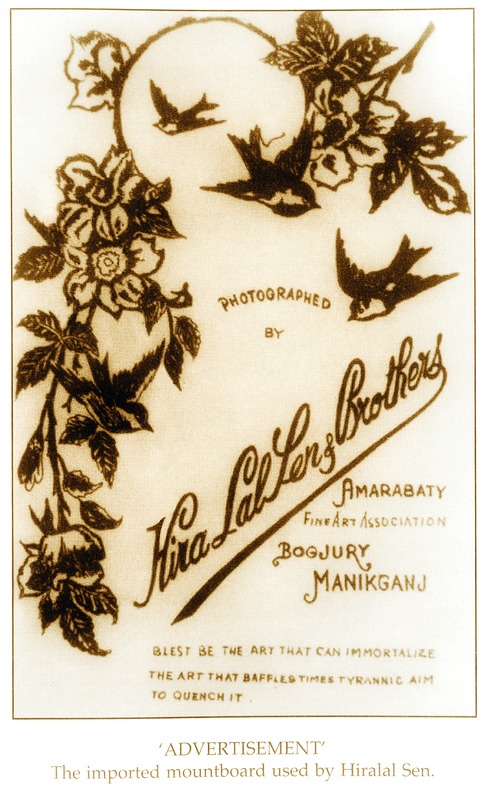
While Mumbai is considered the capital of Indian cinema, it was Kolkata which played the role of prime mover in the development and growth of the film industry. One reason was the arrival of a man called Stephens. The Englishman started showing his bioscope with the Star Theatre Group and the first seeds of cinema in the minds of the public. Stephens influenced, unknowingly, a man called Hiralal Sen, who was attracted to the medium and approached Stephens to help him out to start his enterprise. He didn’t have much success with Stephens, but perseverance paid off and he set off by borrowing ₹5000 from his parents and till he passed away in 1917, he had made 40 films — including two documentaries — of which, one on the 1905 Partition of Bengal is considered the first political film in India. Incidentally, Hiralal also made a few advertising commercials since he travelled all over Bengal to screen his films.
Two days before his death, his entire equipment and almost all the footage of his films were destroyed by a fire which even killed his niece.
Before his death, Hiralal had set the film business in motion. Dhundiraj Govind Phalke, a Marathi Brahmin from Mumbai — popularly known as Dadasaheb Phalke — independently picked up the role of becoming the Father of Indian Cinema. He made India’s first feature film, Raja Harishchandra in 1913, and till 1937 he had made 95 feature films and 27 short films, which included Mohini Bhamsasur, considered to be his best work.
View Movie – Raja Harishchandra 1913
Courtesy : Artpickles